Yet one feels worth every rupee.
The other feels overpriced.
Why?
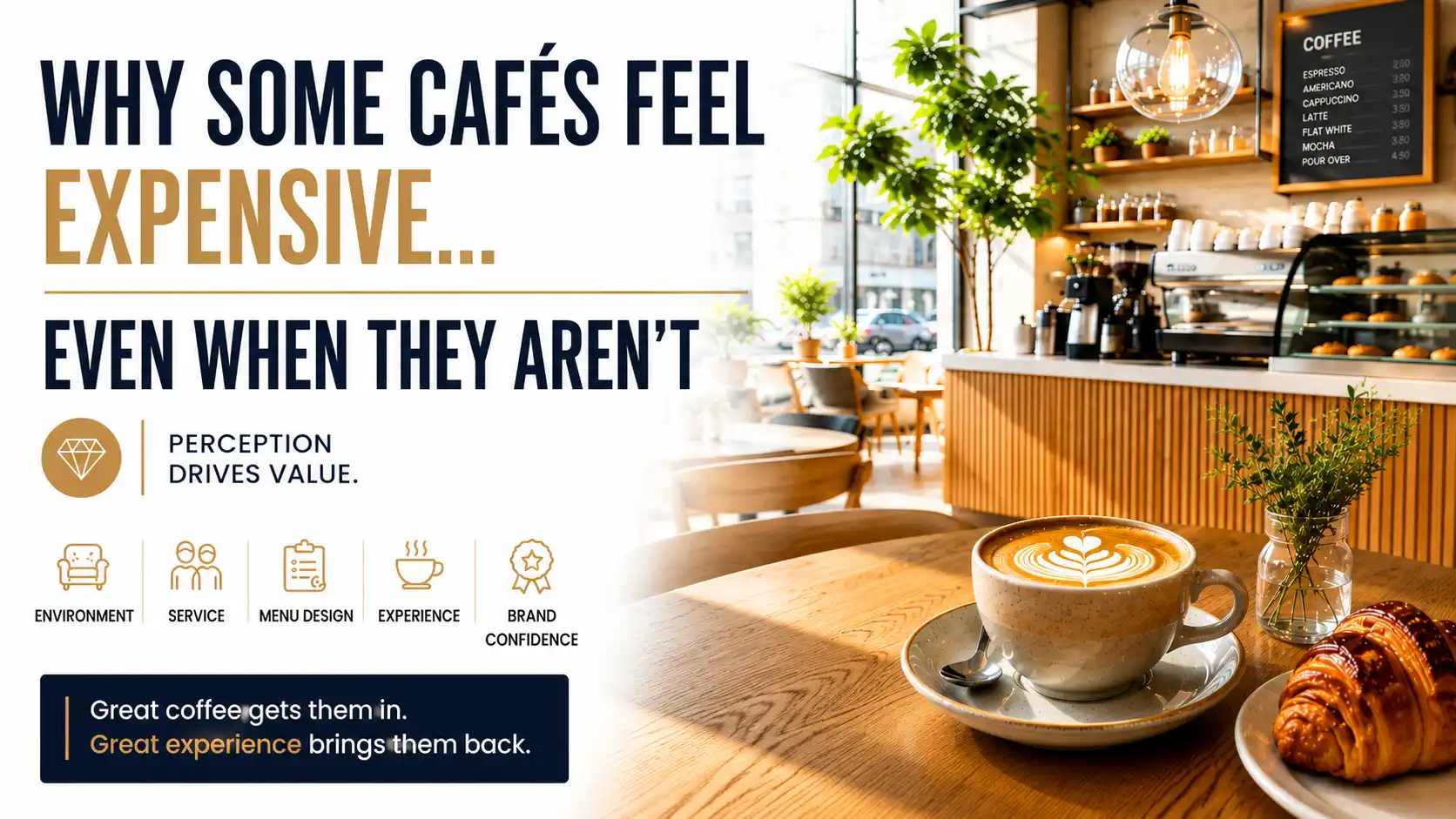
Because customers rarely judge value by the coffee alone.
They judge it by how the experience makes them feel.
The lighting.
The music.
The cleanliness.
The smell when they walk in.
The friendliness of the staff.
The confidence behind the counter.
The seating comfort.
The menu design.
The quality of the takeaway cup.
The speed of service.
The atmosphere created by the people inside the space.
All of these details shape perception long before the customer even tastes the coffee.
This is something luxury hospitality understood decades ago.
Guests do not simply pay for products.
They pay for emotion, comfort, atmosphere, consistency, and identity.
The hospitality industry mastered the art of making people feel something.
And the café industry is now entering the same reality.
Today, coffee quality alone is no longer enough.
That statement may upset some people in specialty coffee, but it is increasingly true.
A café can source exceptional beans, invest in expensive equipment, hire talented baristas, and still struggle to build customer loyalty.
Meanwhile, another café with less impressive coffee can stay packed every single day.
Why?
Because customers remember experiences more than tasting notes.
Most consumers cannot clearly distinguish between subtle flavour profiles like red berries, stone fruit, jasmine, or cacao nibs.
But they absolutely notice how a space made them feel.
Did the café feel welcoming?
Did the staff acknowledge them?
Did the environment feel calm or stressful?
Did they feel comfortable staying there?
Did they feel proud posting it on Instagram?
Did the experience match the price?
These questions drive repeat business far more than many operators realise.
The modern café has evolved far beyond being a place that simply sells coffee.
Consumers now use cafés as:
• workspaces
• meeting places
• creative environments
• social hubs
• lifestyle extensions
• personal rituals
For many people, visiting a café is part of their identity.
This is especially true with younger consumers who are heavily influenced by aesthetics, social media, branding, and emotional connection.
People increasingly choose cafés the same way they choose fashion brands, hotels, gyms, or restaurants.
They choose places that reflect who they are — or who they want to become.
That changes everything.
Because once coffee becomes emotional rather than functional, pricing becomes psychological.
This explains why one café can charge ₹120 for a cappuccino while another successfully charges ₹400.
The difference is not always product quality.
The difference is perceived value.
Luxury hotels understand this deeply.
When guests pay premium room rates, they are not simply paying for a bed.
They are paying for service, atmosphere, emotional comfort, trust, attention to detail, and status.
The same principle increasingly applies to cafés.
A customer walking into a beautifully designed café with exceptional hospitality often feels more justified paying premium prices — even if the coffee itself is not dramatically different from competitors.
This is where many independent cafés struggle.
They focus almost entirely on the product while neglecting hospitality fundamentals.
Some cafés invest lakhs into espresso machines but very little into staff training, guest interaction, lighting, music, or customer flow.
Others obsess over brew ratios while forgetting basic warmth and consistency.
But hospitality is what transforms a coffee shop into a brand.
The cafés that win long term are rarely the ones with only the “best coffee.”
They are the ones that create memorable experiences consistently.
Consistency is especially important.
Customers forgive occasional mistakes in coffee quality.
They rarely forgive poor service, rude staff, dirty environments, or uncomfortable spaces.
Because hospitality creates emotional memory.
And emotional memory drives loyalty.
This is one of the biggest lessons the coffee industry can learn from luxury hospitality.
Great hospitality is invisible when done correctly.
But customers feel it immediately when it is missing.
The world’s most successful café brands understand this balance extremely well.
Look at global chains and modern lifestyle cafés.
Many are not industry leaders because they have the most technically perfect espresso.
They succeed because they deliver familiarity, consistency, emotional comfort, convenience, and brand identity at scale.
Customers know exactly how the experience will feel before they even walk through the door.
That predictability creates trust.
And trust creates repeat business.
Meanwhile, many specialty cafés unintentionally create intimidating environments.
Complicated menus.
Overly technical language.
Baristas who appear unapproachable.
Spaces that feel exclusive rather than welcoming.
For industry professionals, this may feel exciting or authentic.
For everyday consumers, it can feel uncomfortable.
And uncomfortable customers rarely become loyal customers.
This does not mean cafés should lower standards or abandon specialty coffee culture.
It means hospitality must evolve alongside quality.
The future belongs to cafés that combine exceptional coffee with exceptional guest experience.
Operators who understand both hospitality and branding will dominate the next decade of café culture.
Because consumers are becoming more selective about where they spend time — not just money.
In an era where people can order coffee at home, buy ready-to-drink products, or use delivery apps instantly, cafés must offer something technology cannot replace.
- Human connection.
- Atmosphere.
- Emotion.
- Community.
- Escape.
- Experience.
That is the true product modern cafés are selling.
Not just coffee.
And perhaps that is the uncomfortable truth many in the industry still underestimate.
The cafés that survive the future may not necessarily be the ones serving the most complex coffee.
They may simply be the ones that make people feel the best.
What do you think matters more today: exceptional coffee, or exceptional hospitality?